Production Notes
Drums and percussion, keyboards, backup vocals: R Thomas
Guitars, Mandolin, Melodica, Bass, Lead vocals, backup vocals: PS Perkins
Lyric Sheet
Aardvark girl, come trumpet your horn
Bellow your clarion call
Summon your dark and impenetrable cloud
And let your hailstones fall
Are we just ants crawling around on the ground
Are we just termites in a crumbling mound
Scatter the poisoned thorns in their lane
May they tread upon those in their path
The stinging in their feet shall remind them
They’ll be dead before their next bath
Aardvark girl burrow down in your den
The night will be ending soon
The Oryx are gathered at the watering hole
And your face is in the moon
Are we just ants crawling around on the ground
Are we just termites in a crumbling mound
We are just ants crawling around on the ground
We are just termites in a crumbling mound
Addendums
The Oryx of the Aardvark Girl — The Storm
The Oryx of the Aardvark Girl represents transformation through ordeal. It is the relic of a being who entered the wilderness as a girl and returned as something no longer entirely human. Her beauty drew people toward her. Her voice called the storm. Her death left behind an instrument capable of making the heavens answer.
As a Nazilic Arcana, The Oryx of the Aardvark Girl symbolizes the terrible price of becoming something greater than oneself. It is the moment when suffering ceases to be endured and becomes power. The horn is both gift and warning: some transformations cannot be reversed, and some prayers are answered too literally.
Upright: Transformation. Revelation. Beauty. Power awakened through suffering. The voice that commands nature to answer.
Reversed: Catastrophe. Uncontrolled power. Transformation without return. Calling upon forces that cannot distinguish between blessing and destruction.
The question of the Arcana:
What did you become when you finally asked the heavens to answer you?
Among the earliest Nazilic Arcana, few have inspired more disagreement than the Oryx of the Aardvark Girl. While popular commentaries frequently describe the image as representing justice or righteous vengeance, the oldest surviving Bell inventories make no such claim. Their concern lies almost exclusively with the horn itself, whose reputed ability to summon storm, hail, and thorn is treated as an observable phenomenon rather than a moral allegory.
The identification of the horn's original owner remains equally unsettled. Most modern scholars accept the Bell attribution to Gǃkúnǁʼhòmdímà, the Beautiful Aardvark Girl of Juǀʼhoan tradition, though earlier catalogues record competing associations with a python maiden, an elephant woman, and several unnamed desert guardians whose identities have likely become conflated through centuries of oral transmission. The Library regards these contradictions as characteristic of the tradition rather than evidence against it.
For readers of the Arcana, the card has gradually acquired a different significance. The storm is no longer understood primarily as punishment inflicted upon others, but as the unavoidable consequence of disturbing an older balance. One does not summon the horn to command the weather. One sounds it only after the weather has already begun gathering beyond the horizon.
As noted in the Fifth Bell Concordance:
"The fool imagines the horn creates the storm.
The wise recognize that it merely announces its arrival."
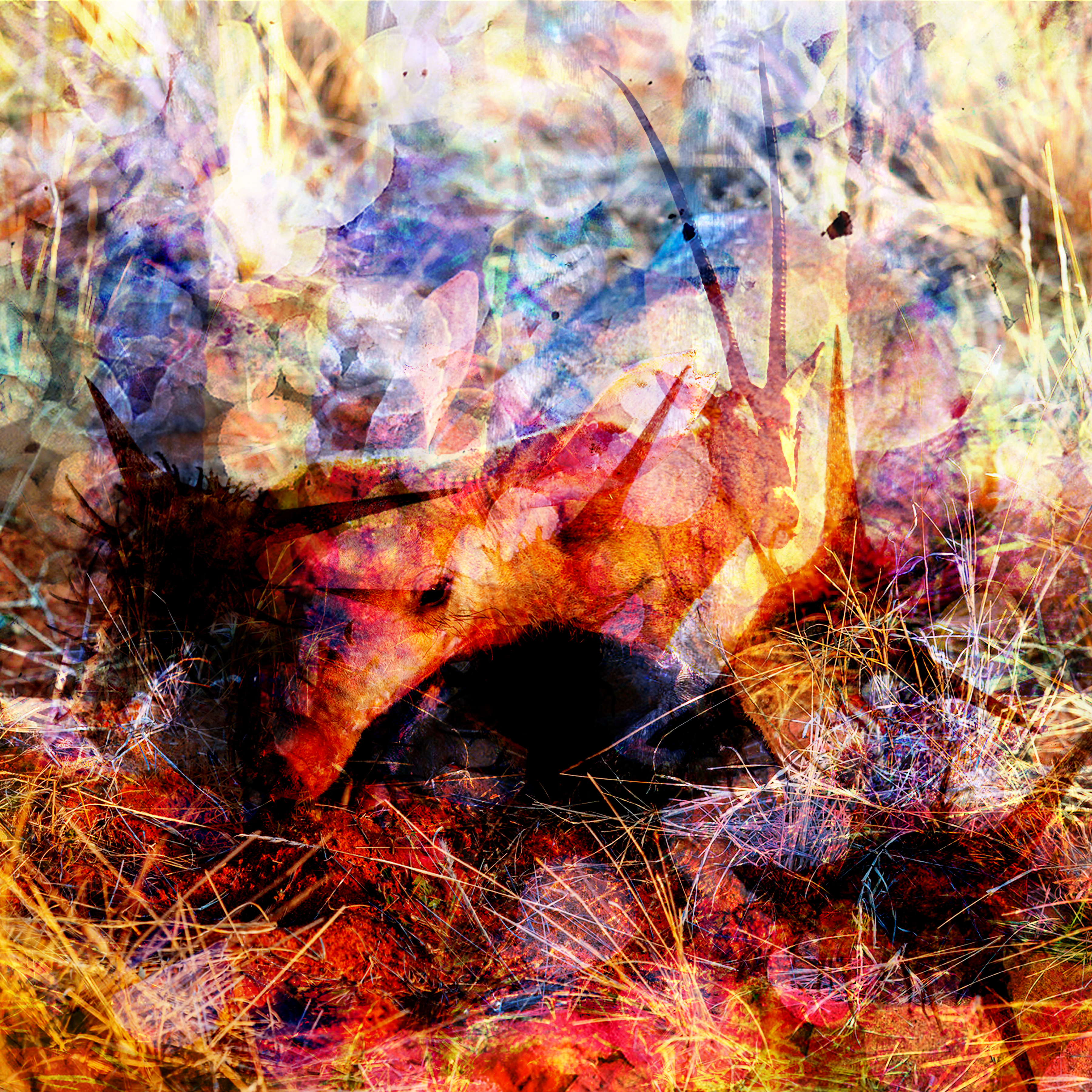
A black and hollowed horn of an ancient Oryx, with two smooth slots carved into the polished chimney
Legends speak of this horn, that when it is blown it summons a cloud of immense density
This cloud is neither vapor nor gaseous, but a fog of obscurity, blinding those caught within
A blow upon the second slot, finger blocking the first slot, produces the next note
Which when sounded, brings hailstones from this cloud which clobber and concuss those trapped
The third and final note when blown, produces rapidly growing patches of noxious tribulus vines
Whose poisonous goat headed thorns bloom with a putrid scent, unfolding beneath the feet of the enemy
Poison seeping into their feet, which walking merely accelerates, bringing paralysis upon the victims
Until they fall dead upon the ground, blinded by fog, pummelled by hailstones, feet stinging with fire
The path by which this curious artifact became embedded within the Bell collection is mostly speculation
It lurks quietly amidst the artifacts, a long curved horn from the antler of an oryx
The most lucid and plausible of rumors suggests it was obtained by Arkin Bell
Hidden inside a dusty wooden crate, padded by frayed cotton blankets and burlap sacks
Nestled beside the lacteous snail of historical legend, which grants the clarity of a certain childish mind
Crossing perilous ridges and soaring clifftops through rippling peaks of the Ethiopian highlands
Perhaps found in a narrow cave at the foot of those majestic and snow crowned mountains of the moon
Where the Nile is birthed from beneath the world and the serpent people first slithered from the void
Secretly smuggled across sun drenched plains, dotted with rings of violets where the springs bubble forth
Which soothe and heal the feet, blistered and burnt from travel across the sun baked soil
Marginalia
Annotation 04-12A: The Weather That Remembers
Although later popular retellings frequently present the Horn of the Aardvark Girl as an instrument of vengeance, Bell scholars have generally resisted so narrow an interpretation. The earliest inventories describe its effects with unusual restraint, recording only the appearance of obscuring clouds, localized hailfall, and the rapid emergence of puncture vines. Nowhere do the oldest sources suggest that these phenomena distinguish between the innocent and the guilty. Modern commentators therefore regard the storm less as an act of punishment than as the restoration of an older equilibrium. The horn does not command nature; it announces that a forgotten balance has already begun correcting itself.
Annotation 04-12B: Gǃkúnǁʼhòmdímà and the Problem of Attribution
The identity of the Beautiful Aardvark Girl remains one of the more persistent questions within Bell historiography. While the Bell family consistently attributes the horn to Gǃkúnǁʼhòmdímà of Juǀʼhoan tradition, parallel accounts recorded during the Morningside Encroachment preserve nearly identical narratives in which the guardian appears as a python maiden, an elephant woman, or an unnamed wanderer whose footprints attracted lightning. Rather than dismissing these contradictions, contemporary Nazilic scholars have suggested they represent successive cultural memories of a single recurring archetype. In this reading, the changing form of the guardian is itself evidence that the tradition remained alive, adapting to the symbolic language of each civilization that inherited it.
As Adelaide Mercer later observed:
"History preserves names, but memory preserves patterns."
Annotation 04-12C: The Three Notes
Several obscure Bell manuscripts insist that the horn possesses only three playable tones. Although this limitation has often been interpreted as a practical characteristic of the instrument, later commentators have proposed a symbolic correspondence with the three successive manifestations described throughout the earliest accounts: obscurity, correction, and consequence. Bell philosopher Elias Voss argued that these should not be understood as separate miracles but as a single unfolding event. One first loses the ability to see clearly, then encounters the accumulated force of neglected causes, and finally discovers that the landscape itself has been permanently altered.
A marginal note preserved in the Fourth Bell Index concludes with characteristic brevity:
"Every storm arrives in three movements. Only the impatient mistake the first for the last."